Why wax gives out and ceramic holds
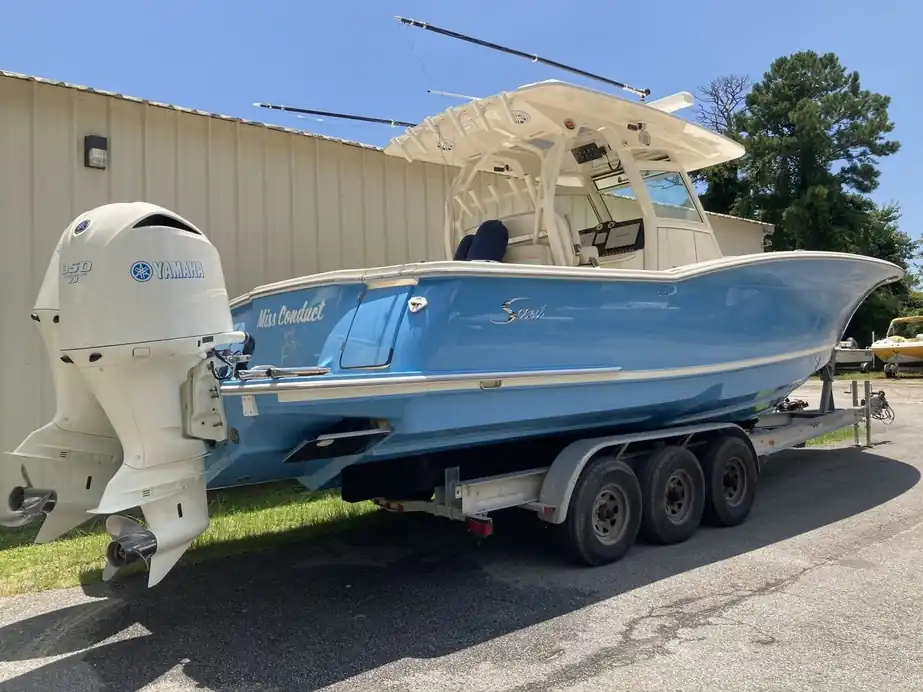
Wax sits on top of a hull as a thin film and gives out in weeks. Salt and sun keep working on the gelcoat underneath, and the white haze comes back. Craig's 2018 Sportsman Heritage 231 had that haze before it came to Bluffton Road. Custom Marine Finishes is a certified Glidecoat Pro center, so the answer here is a ceramic coating instead of another coat of wax.
Glidecoat Pro is a 9H, hydrophobic coating. The hardness resists the light scratching that dulls a finish, and the hydrophobic surface makes water bead and sheet off, carrying salt and grime with it. The boat rinses easier, stays cleaner between washes, and the owner spends weekends fishing instead of buffing.
Correction first, coating second
A ceramic coating locks in whatever is under it, so the surface is corrected before anything goes on. That is wet sanding when it is needed, compounding, polishing and oxidation removal, the same work the detailing crew does, finished with a clean so the coating bonds to bare gelcoat or paint rather than to old wax or haze.
Application happens inside the protected bays at 138 Bluffton Rd, out of the sun and wind that ruin a fresh coating outdoors. Once it is on, the coating cures for 8 to 12 hours, and the boat stays under cover through the cure before it goes back on the trailer.
Graphene coatings are also offered, and Paul explains the difference between the two at the inspection. Every job starts with an evaluation of the vessel and a clearly defined scope of work, and you get a fixed price before anything is applied, with no surprise hourly billing.
Keeping a coated hull coated
Wash the boat every 2 to 4 weeks with a gentle soap. Because the surface is hydrophobic, salt and grime rinse off far more easily than they do off wax, so the wash stays quick and the coating does the rest between visits. Glidecoat Pro also comes with an 18-month guarantee certificate.
Two of the yard's reviewers show the order that works. Craig's boat came in for gelcoat and trailer-ramp damage repair, and he wrote that everything is protected with ceramic coating. Michael Wilson dropped his boat off the trailer at the ramp, got it back looking new again, and planned to return the next week for his ceramic coating.
Fix the gelcoat, correct the surface, then seal it. The same coating suits a fresh Awlgrip or Alexseal finish from the paint bay, so a repainted hull can leave the yard sealed against the salt and sun that faded it, once the repair work is done.