A hull shows you where it is hurt
Most fiberglass damage starts small. A trailer ramp leaves a gouge in the gelcoat, a dock takes a chip out of the topsides, and a stress crack spreads from a hard knock. Sun does its own damage too, turning gelcoat chalky and faded until the white reads grey. The worst finds are the quiet ones: a soft spot underfoot, or water sitting inside the hull.
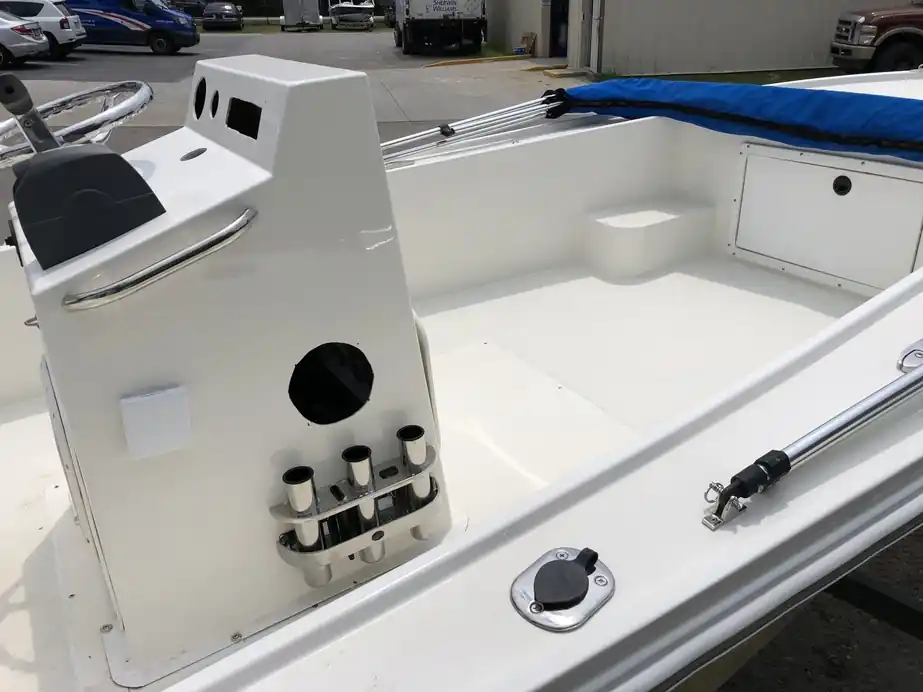
One customer's boat came in with a hole in the hull and 13 gallons of water inside it. The crew pumped it out, repaired the hole, resurfaced the deck and painted the outside, and the boat went home inside a week. That is the argument for an inspection first: water, soft spots and hidden cracks decide the scope of the job long before any gelcoat is mixed.
Ground back, rebuilt in epoxy, then sealed under gelcoat
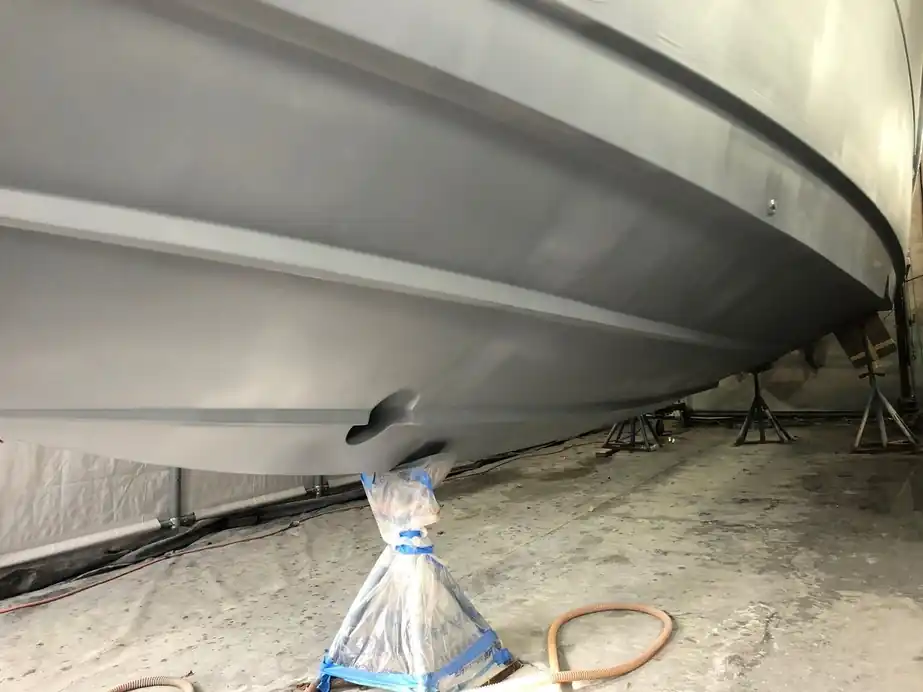
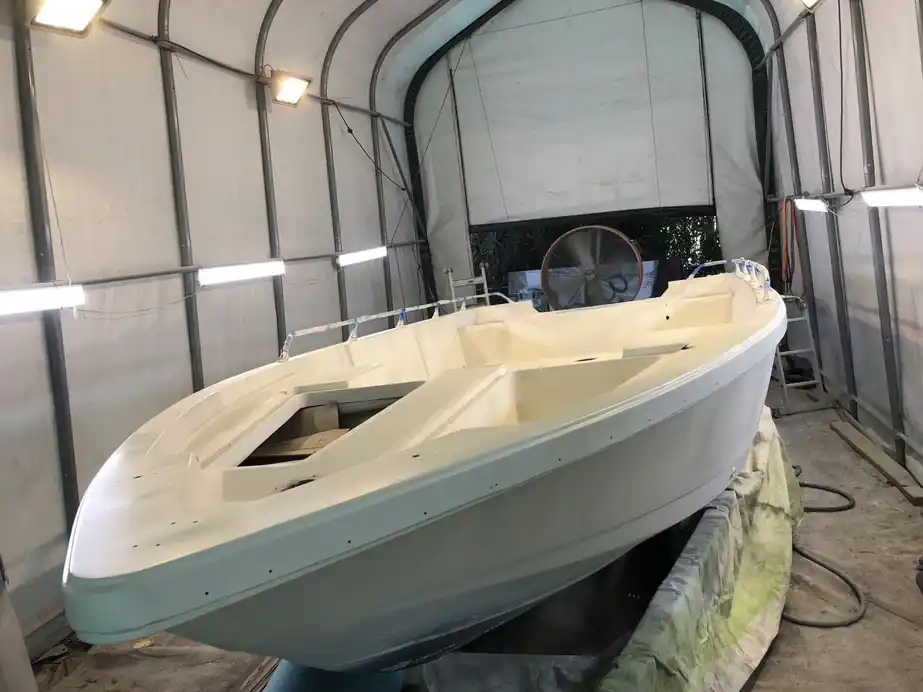
The sequence on Bluffton Road follows the yard's coat schedule: wash the hull, inspect it for cracks, chips and soft spots, then grind the damage back to sound material. Paul's crew works inside the protected repair bays, so weather stays off the open laminate. Nothing gets filled until the ground-out area is clean and the scope of work is written down.
The rebuild uses epoxy-based fillers and bonding agents rather than standard polyester. The area is then faired flat, reinforced where the damage called for it, and only then closed up. The guarantee further down is written against exactly the failures this sequence is built to prevent: cracking and blistering.
Gelcoat goes on last. Factory-mixed gelcoats are used whenever they are available, and the colour is matched by hand to the surrounding hull. Older gelcoat fades unevenly, so an exact match cannot always be guaranteed. Paul tells you that at the inspection, before the repair, and not after it.
Three to five years against cracking and blistering
Qualifying fiberglass and gelcoat repairs carry a 3 to 5-year guarantee against cracking and blistering, and qualifying repair and paint work carries a 5-year guarantee. The word qualifying matters, so ask at the inspection which repairs on your boat fall under it before you agree to anything.
Every job begins with an evaluation of the boat and a clearly defined scope of work, and the price that comes out of it is fixed, with no surprise hourly billing. Karen Ryan wrote that Paul went over in detail what needed doing, and that what he quoted was what he charged.
Once the gelcoat is back, protect it with wax, or with a ceramic coating if you want it to shrug off salt and sun for longer. The yard is at 138 Bluffton Rd (Hwy 46), open Monday to Friday 7:00 AM to 3:00 PM, and the number is (843) 304-2798. Tell Paul the make, the length and where the damage is.