Choosing Bottom Paint for a Boat Kept in Lowcountry Water
The right antifouling depends on where your boat sits and how long it stays wet, not on which can has the best label.
October 15, 2026 · 4 min read
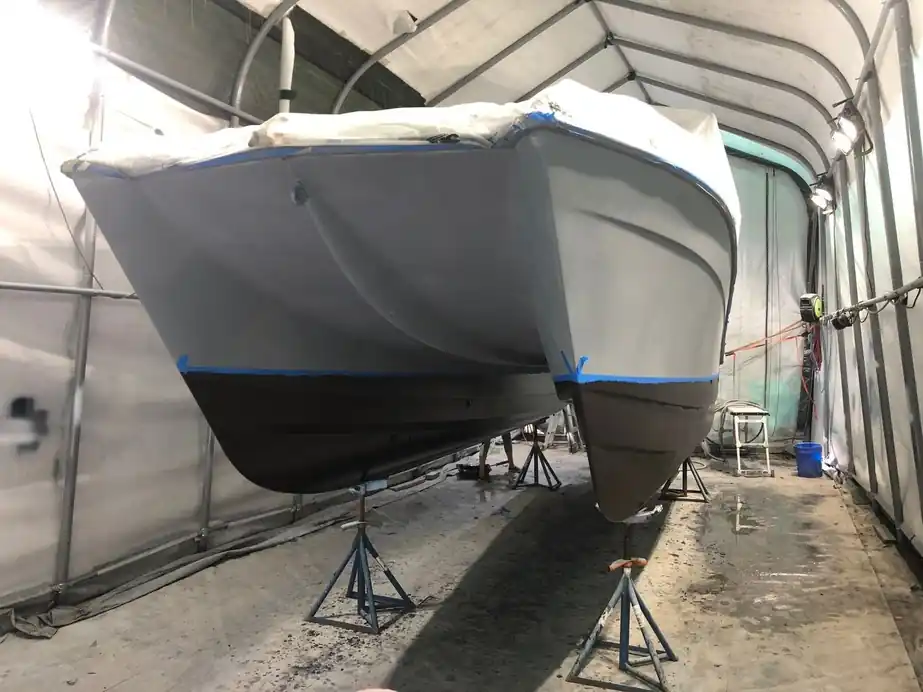
Bottom paint is the coating nobody sees until the boat comes out of the water, and it decides how much speed, fuel economy and scrubbing time you get back all season. For a boat kept in Lowcountry water, the useful question is not which can is best. It is which paint suits where your boat sits, how often it moves and how long it stays wet.
Start with how the boat is stored
Every antifouling decision follows from storage, so settle that first. A boat tied to a dock in a tidal creek all summer has very different needs from one on a lift, and both differ from a trailer boat that touches the water on weekends. Most boats fall into one of three groups.
- In-water: the hull stays wet for months at a time. Growth starts the week the paint stops working, so you want a coating made for continuous submersion and a full season of pressure.
- Seasonal: the boat spends part of the year afloat and part hauled or lifted. The paint has to hold up while wet and tolerate sitting dry between seasons.
- Trailered: the hull is wet for hours or a few days at a time. Many owners assume this boat needs no bottom paint, and sometimes that is right. A week tied up at a dock in warm water can change the answer fast.
Why the yard picks the paint by location, water conditions and storage
Custom Marine Finishes is a certified Sea Hawk Bottom Paint Center, and Paul does not hand every customer the same can. Three things drive the choice: where the boat lives, what the water is like there, and how the boat is stored. A boat on a marina dock in Bluffton sees different growth than one on a creek off Beaufort or a slip near Hilton Head. Slow, warm, brackish water tends to grow things faster than a stretch with steady current moving through it.
That is why the first conversation is about your routine rather than a color chart. Tell us where the boat sits, how many days a month it runs, whether it gets lifted, and how long it has gone between haul-outs. A boat that runs hard most weekends scrubs itself a little. A boat that sits still collects growth quickly. The paint should match the way you actually use it.
What the old paint tells us
Before any new coat goes on, someone has to look at what is already there. Sanding over a sound, compatible coat is a different job from stripping a hull that has years of layered paint, flaking or blisters. The process at the yard starts with a wash and an inspection for cracks, chips and soft spots, because bottom paint over a damaged hull only hides the problem for a season.
Failing layers, bare gelcoat and a previous owner's mystery coating each call for different prep. Skipping that prep is the usual reason a fresh bottom job peels early. When you get a quote, it should be described in those terms: what is on the hull now, what has to come off, and what has to be repaired first.
What bottom painting costs
Bottom painting at Custom Marine Finishes starts at $45 per foot. That is a starting point, not a final number, and the work behind it is what moves the price. The final figure depends on:
- The condition of the hull
- What coatings are already on it and how much has to come off
- The amount of prep and sanding the surface needs
- Repairs found during the inspection
- The paint selected for your water and storage
A clean hull with sound old paint costs less to bring back than one that needs fairing, filling or blister repair first. The paint choice moves the number too, which is another reason storage matters. A longer-lasting coat makes sense for a boat that lives in the water. It does not make sense for a boat that sees the water twice a month.
Quotes are fixed-price after an evaluation of the boat, with a clearly defined scope of work. You are not signing up for hourly billing that grows while the boat sits in the yard. Kenny Blackwood's review says his bottom paint project was finished earlier than expected and right on budget, which is the standard to hold any yard to.
Timing the haul-out and watching the paint between jobs
Bottom work needs the boat out of the water and the hull dry, so plan it around your own calendar rather than waiting for the waterline to look bad. Between jobs, take a look at the waterline, the running gear and the lower unit each time you haul or lift. That tells you how the paint is wearing. Heavy growth by midseason means the paint choice or the storage plan needs a rethink, and it helps us to hear that when you call.
Peter Denigris had his pontoon boat bottom painted and described Paul as knowledgeable and friendly. That is how the conversation should go: what you have, what it needs, what it costs. For details on what the job includes, see bottom painting on our services page. To talk through your own boat, call (843) 304-2798 or ask for an inspection through the contact page, and we will tell you which approach fits your water.
Custom Marine Finishes, (843) 304-2798
Call (843) 304-2798More articles
When Gelcoat Chalking Is a Detail Job and When It Needs Repair
Dull, chalky gelcoat often comes back with the right detailing, but cracks and gouges need real repair work.
Ceramic Coating or Wax for Your Boat: What Each One Does
Both protect gelcoat, but they behave very differently once the boat is back in the sun and salt.