When Gelcoat Chalking Is a Detail Job and When It Needs Repair
Dull, chalky gelcoat often comes back with the right detailing, but cracks and gouges need real repair work.
October 15, 2026 · 4 min read
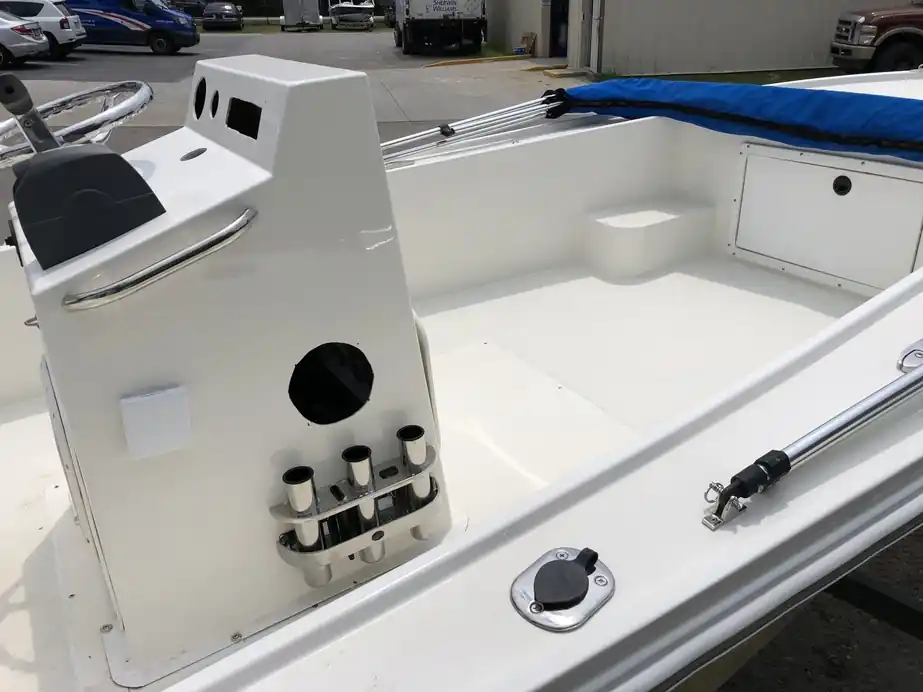
Gelcoat is the colored resin skin on a fiberglass boat. Sun, heat, salt and years of use wear on it, and the damage shows up in a few different ways. Three problems in particular get mixed up from the dock: oxidation, chalking and stress cracks. Two of them can often be fixed with detailing. One cannot be polished away, and knowing which is which saves you from paying for the wrong job.
What oxidation and chalking look like
Oxidized gelcoat looks dull and flat, with the gloss gone from the surface. Run your hand across a white hull and, if it comes away with a white residue, the gelcoat is chalking. Darker colors show it earlier as a gray haze, because the powder stands out against the color underneath.
The good news is that this is a surface problem. The gelcoat is still there, but the top layer has broken down. That layer can be removed and the gloss brought back, as long as there is enough gelcoat left to work with. Craig described the result on his Sportsman Heritage 231 in his review: no more white haze, no scratches or gouges, a showroom finish.
When detailing is the right answer
A real restoration detail goes beyond a wash and wax. At Custom Marine Finishes it includes wet sanding when appropriate, using controlled grits from 800 up to 4000, then compounding, polishing and oxidation removal, finished with machine wax or a marine coating. The sanding takes off the dead layer and the finer grits and polishing bring back the depth.
The words when appropriate matter. Gelcoat is thin, and every pass with sandpaper or a compound removes a little of it. A hull that has been neglected for years may have less to give than one that was waxed regularly, and a careful detailer reads that before choosing a grit. Detailing is a good fit when:
- The finish is dull or flat but the surface is unbroken
- Your hand picks up white or colored chalk
- Scratches are light and do not catch a fingernail
- White gelcoat has yellowed or gone gray without cracking
Detailing at the yard starts at $59.50 per foot, and the exact quote comes after an inspection of your boat.
Stress cracks are a different problem
Stress cracks usually show up as a spiderweb or star pattern around cleats, rails, hatches and console corners, anywhere the fiberglass flexes. Gelcoat is brittle compared with the laminate behind it, so it cracks when the structure moves. Polishing makes the area around the crack shine, but the crack remains.
Some cracks stay in the gelcoat and are cosmetic. Others are a sign that the laminate underneath is moving or has taken on water. You cannot tell which from the surface alone. The inspection looks for cracks, chips and soft spots, and the repair that follows depends on what is found.
Chips, gouges and cracks mean repair
Repair starts by opening the damage up so the bond is on sound material, then rebuilding it, fairing it smooth and finishing it with gelcoat or paint. Custom Marine Finishes uses epoxy-based fillers and bonding agents rather than standard polyester. Epoxy sticks well and holds up in a place where a boat flexes, which is why it matters for cracks that came from movement.
On qualifying fiberglass and gelcoat repairs, the yard backs the work with a guarantee of three to five years against cracking and blistering. The word qualifying is there because the guarantee depends on the repair, and the quote will tell you where your job stands.
Color-match honesty
When gelcoat gets repaired, the new patch has to look like the old hull. The yard uses factory-mixed gelcoats when possible, but an exact match cannot always be guaranteed. Old gelcoat fades and ages in the sun, so even a correct factory formula can sit next to a faded neighbor.
A good repair blends the edges and polishes the area so the transition is hard to see. On some boats, the most honest answer is to refinish a whole panel or section so the color reads as one. Ask about this before the work starts, and be wary of anyone who promises a perfect match on a hull that has been in the sun for ten years.
When the answer is paint
If large areas have chalked through, if the hull has been patched many times, or if the colors will not match, paint can be the better call than chasing one repair after another. See boat painting on our services page for how a full refinish works, and our article on repainting versus restoring gelcoat for how to decide between the two.
Not sure where your boat falls? Call (843) 304-2798 or send a message through the contact page, and Paul will tell you what he sees: a detail job, a repair or a repaint.
Custom Marine Finishes, (843) 304-2798
Call (843) 304-2798More articles
Choosing Bottom Paint for a Boat Kept in Lowcountry Water
The right antifouling depends on where your boat sits and how long it stays wet, not on which can has the best label.
Ceramic Coating or Wax for Your Boat: What Each One Does
Both protect gelcoat, but they behave very differently once the boat is back in the sun and salt.